Toki Mahjong Games For Seniors
- 4.6
- Rating
- 1.00M
- Installs
- Free
- Price

 Analysis by App-foxy
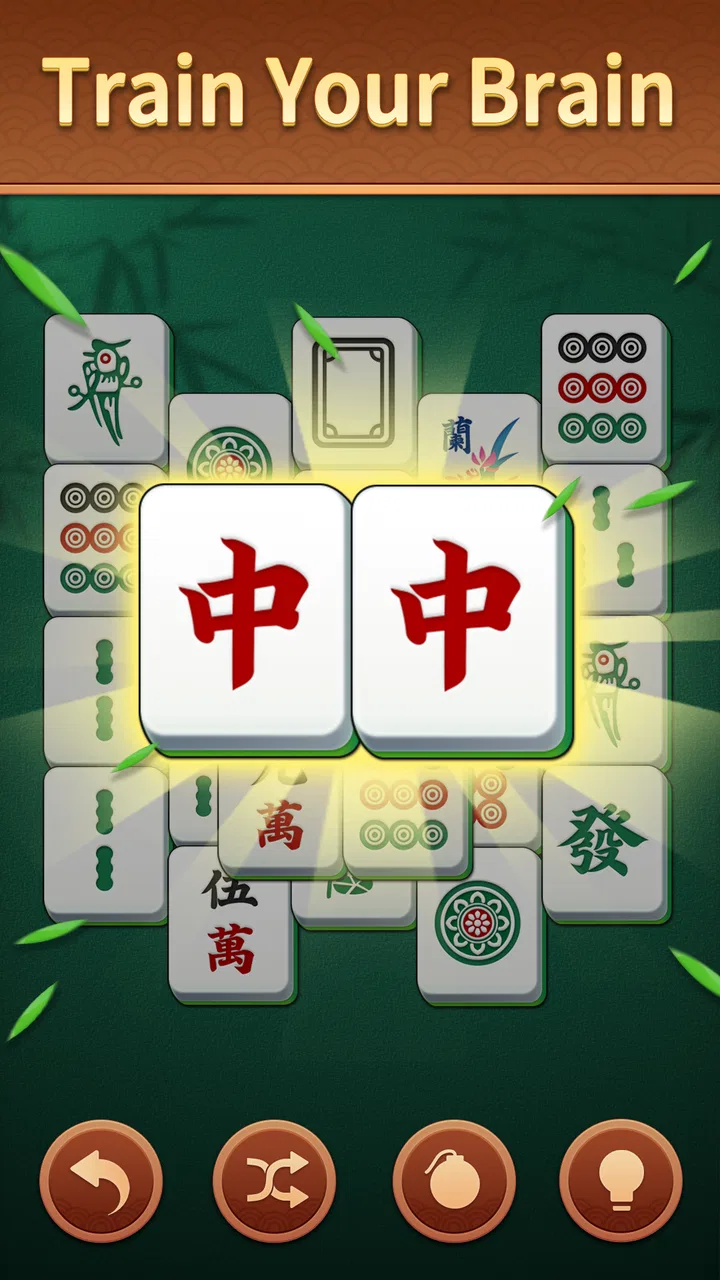
I spent time with Toki Mahjong Games For Seniors as a calm, tile-matching board game rather than treating it like a competitive mahjong table. That distinction matters. The experience is built around finding matching tiles, so the appeal is closer to a focused puzzle session than to learning the rules, scoring, and strategy of traditional mahjong. I found it easy to understand within a few moments, but the simple premise still leaves room for thoughtful decisions when the board becomes less obvious.
It is a free game from Card Games, Inc., available for players rated Everyone. The current release is version 1.3.0, and it runs on devices using Android 7.0 or later. Its presentation and pace make it especially approachable for older players, people who want a low-pressure mental exercise, or anyone looking for something to play in short breaks without having to follow a story or manage a complicated set of controls.
How I judged Toki Mahjong before recommending it
My first question with a puzzle game like this is not whether it looks attractive in a store preview. I want to know whether the central action is clear, whether the board remains comfortable to read, and whether the game gives me a reason to return after the first few rounds. Toki Mahjong does well on the first point. Matching tiles is immediately understandable, so I did not need a tutorial-heavy introduction or prior knowledge of mahjong.
You May Also Like

 Blood Strike: 2.5 Anniversary
Blood Strike’s Loadouts Turn Every Drop Into a Tactical Gamble
A close look at Blood Strike’s custom loadouts: how fast access to signature weapons reshapes its battle royale rhythm, rewards preparation, and narrows the gap between fights.

 Pandora - Music & Podcasts
Pandora’s Music Is Easy to Start, but Harder to Recover
Pandora’s strength is its low-effort path from a seed to a station. Its weak spot is how much confidence it asks you to place in connection, setup, and quiet recovery.

 8 Ball Pool
 Is Built on Rivalries, Rematches, and Routine
A close look at the rivalries, rematches, shared routines, and unanswered safety questions that turn a quick pool match into a persistent mobile community.

 Samsung Music
’s Quiet Strength Is Playing What You Already Own
Its reach comes less from spectacle than from dependable access to a personal library. That simplicity is both the app’s strongest retention engine and its ceiling.

 AccuWeather: Weather Radar
AccuWeather Review: A Quick, Clear Forecast for Everyday Decisions
For everyday plans, the best forecast is the one you can understand quickly. AccuWeather makes rain timing, radar, and local conditions easy to act on, with a few trade-offs.

 Hill Climb Racing
Why Hill Climb Racing Still Turns Crashes Into One More Run
A tiny car, a bumpy hill and one more upgrade: Hill Climb Racing keeps resurfacing because its simple chaos makes every near-miss feel personal.
More From Our News Desk



The second decision point is the kind of concentration the game demands. This is not a reflex game, and it does not ask me to memorize a long rulebook. Instead, I scan the arrangement, identify possible pairs, and decide which match makes the most sense to remove. That makes it suitable for a quiet morning, a waiting room, or a few minutes before bed. The mental effort is present, but it feels manageable rather than exhausting.
I also considered whether it works for the audience suggested by its name. Older players often need a game that can be understood without pressure, and a tile board is a familiar visual language. The important practical question is whether the player can comfortably distinguish pieces and follow the board. Anyone choosing it for a senior family member should try it on that person’s device first, because screen size, brightness, and personal eyesight will affect the experience more than the basic rules do.
Another criterion is patience. Tile-matching games can become repetitive when every round feels identical. Toki Mahjong is strongest when I want a predictable routine, not when I am searching for a deep campaign or a dramatic sense of progress. If your ideal board game involves opponents, bluffing, or constantly changing tactics, this is probably the wrong direction.
The game has attracted over one million installs and holds a 4.6 average from around 4.1 thousand ratings, which suggests that its approachable format has found a sizeable audience. I would not treat those figures as a substitute for personal testing, but they do fit my impression: this is designed as an accessible casual puzzle, not as a specialist mahjong simulator.
The matching loop is simple, but the order of moves matters
At first, the obvious pairs are the main attraction. I can look over the arrangement, spot two similar tiles, and clear them. After that initial layer, the game becomes more interesting because a convenient match is not always the best match. Removing one pair can expose another tile, change what is visible, or leave a less useful arrangement for the next decision.
That is the first non-obvious tip I would give a new player: do not automatically choose the first pair you see. I found it more satisfying to pause for a few seconds and scan the whole board before committing. A match that opens several possibilities can be more valuable than one that merely removes two easy pieces. This small habit turns the session from passive tapping into a modest planning exercise.
I also learned to use the board’s edges as reference points. When several tiles look similar, mentally grouping them by position helps me remember which pair I noticed first. This is particularly useful for a player who prefers a slower pace or is using a smaller phone. Instead of repeatedly searching the entire screen, I can check one area, then another, and reduce the visual clutter in my head.
That workflow makes the game a reasonable brain-training style activity, although I would avoid promising medical or cognitive benefits. What it genuinely offers is repeated practice in visual scanning, attention, and short-term planning. I can feel the difference between playing while distracted and playing with intention: the former becomes random tapping, while the latter gives each move a purpose.
Why the relaxed format works for everyday play
A realistic use case is a short break during a busy day. I can open the game while waiting for an appointment, play a few matching rounds, and stop without losing the thread of a story or leaving a multiplayer match unfinished. That makes it more convenient than many board games that require a longer uninterrupted session.
It also suits a shared household where people have different comfort levels with technology. I could hand the phone to someone who does not enjoy action games and explain the objective in one sentence. There is no need to learn a character’s abilities, understand a complex menu, or compete against a skilled opponent. The low barrier is one of the strongest reasons I would suggest trying it with an older relative.
For that audience, I would make a few practical adjustments before handing over the device. I would raise the screen brightness to a comfortable level, make sure the phone is held steadily, and remove other distractions from the screen if possible. I would also begin with a short session rather than assuming the player wants to continue for a long time. The game is relaxing when the board feels readable; it becomes frustrating when the player has to strain to distinguish tiles.
The free entry point is helpful because a player can decide whether the visual style and pace suit them without paying first. However, the game includes optional in-app purchases ranging from $0.99 to $49.99 per item. That does not make it unsuitable, but it does mean I would be careful when setting up a device for a child or an older family member who may tap purchase prompts accidentally. The safest approach is to review the device’s purchase controls before leaving the game unattended.
Where Toki Mahjong is more convincing than familiar alternatives
Compared with traditional mahjong games, this is much easier to enter. Traditional versions usually involve several players, a defined rule system, tile combinations, and a stronger emphasis on scoring. Toki Mahjong removes that learning curve and focuses on the visual pleasure of pairing tiles. If I want a solo activity that feels like mahjong without studying the full game, this is the more welcoming choice.
Compared with card solitaire, the tile board gives me a different kind of attention challenge. Solitaire often depends on planning sequences and managing suits or ranks. Here, I am looking for visual matches and thinking about exposure and order. I would choose Toki Mahjong when I want a quieter, more image-based puzzle, while solitaire may be better when I enjoy numerical or suit-based structure.
Compared with fast arcade puzzles, Toki Mahjong wins on pace. I do not have to react before a timer runs out or coordinate several gestures at once. That makes it a better match for relaxed play and for people who find rapid games tiring. The trade-off is obvious: players who depend on speed, sound effects, or constant action may find the experience too restrained.
The most useful strength is its narrow focus. Toki Mahjong does not ask me to juggle a story, a collection system, or a complicated set of objectives. I open it for matching tiles, concentrate on the board, and leave when I am finished. Its best feature is the absence of unnecessary pressure. That simplicity is not a weakness for the right audience; it is the reason the game feels approachable.
What may make another board game a better choice
The same simplicity can limit its long-term appeal. If I am looking for a game with a strong sense of discovery, changing environments, or meaningful competition, this format may feel narrow. A traditional mahjong app would be a better fit for someone who wants to learn authentic rules and play against other people. A strategy board game would suit a player who wants several interacting systems and decisions that build over a longer session.
I would also skip it if my main goal is social play. The experience is centered on an individual matching puzzle, so it does not replace sitting across from another person with a physical board. Likewise, someone who wants a clear narrative destination should choose a story-driven game instead. Toki Mahjong is best understood as a repeatable activity, not as a campaign with a final chapter.
There is a practical trade-off between accessibility and visual density. A board full of patterned tiles can be pleasant for one player and tiring for another. If you have difficulty distinguishing similar images, or if you prefer large, high-contrast interfaces, test the game carefully before committing to it as a daily routine. The Everyone rating describes its general content, not whether every player will find the display comfortable.
I would also be cautious about recommending it solely because it is free. The initial download does not require a purchase, but optional items can cost as much as $49.99 each. I did not find that pricing structure a reason to reject the game outright, yet it is a reason to treat purchases as a deliberate choice rather than part of the basic expectation. Anyone who only wants a completely purchase-free experience may prefer a different puzzle app with no paid extras.
Small habits that make each session more enjoyable
My preferred approach is to play slowly during the first scan. I look for pairs that are easy to identify, then check whether another match would reveal more useful options. This prevents the common mistake of clearing convenient tiles without considering what the remaining board may look like. It also makes the game feel less repetitive because I am actively shaping the order of play.
A second useful habit is to stop before concentration turns into irritation. Since the game works well in short sessions, there is no advantage in forcing another round when my eyes are tired. I get more from a brief, attentive session than from continuing while tapping without really seeing the board. This is particularly relevant for seniors or anyone using the game as a relaxing evening activity.
For family use, I would let the player establish their own rhythm rather than taking over the board. It is tempting to point out every available match, but doing so removes the small planning challenge that makes the game worthwhile. A better approach is to help with the first explanation, then offer occasional hints only when the player asks. That keeps the activity supportive without making it feel like a test.
Another trade-off concerns device choice. A tablet-sized display would likely be more comfortable for players who find phone screens cramped, while a phone is more convenient for quick sessions away from home. The game’s value depends partly on where and how it is played, so I would not judge the experience from a single device setup. For an older user, comfort and visibility should come before portability.
Version, access, and the cost of changing your mind
The current version is 1.3.0, and the minimum operating system is Android 7.0. That makes it accessible to many older Android devices, which is useful if I am setting it up on a spare phone for a family member. Before installing, I would still check that the device is responsive and that the display is large enough for comfortable tile recognition.
Because the game is free to start, the cost of trying it is mainly time and attention rather than an upfront payment. That makes switching in easy: I can test a few sessions and decide whether the matching format holds my interest. Switching away is also straightforward if I discover that I really wanted traditional mahjong, multiplayer competition, or a more varied puzzle structure.
The harder part of switching is not the installation itself but adjusting expectations. Someone coming from solitaire may expect card-like planning, while someone coming from traditional mahjong may expect authentic rules. Toki Mahjong sits between those ideas as a casual tile-matching game. Once I understand that position, the choice becomes clearer and the game’s limitations feel less surprising.
Card Games, Inc. has kept the basic concept familiar enough that I would feel comfortable recommending a trial to a new player. Still, I would explain the purchase range before installing it on another person’s device, especially when that person is not used to mobile games. A free game can be a good low-risk introduction, but purchase awareness remains part of responsible setup.
My recommendation for different kinds of players
I recommend Toki Mahjong to anyone who wants a quiet, solo board puzzle with an immediately understandable objective. It is particularly suitable for older players who enjoy tile imagery, people who want a gentle way to occupy a few minutes, and casual gamers who dislike timers, competition, or complicated controls. The Everyone rating also makes it broadly approachable from a content perspective.
I would recommend it with more hesitation to experienced mahjong players. If your goal is to learn or practice the traditional game, this will not be a substitute for an app built around authentic rules and opponents. I would also point action-oriented players toward something faster, and I would steer story-focused players toward an adventure or strategy game with more variety.
The rating of 4.6 from around 4.1 thousand ratings is encouraging, and the game’s audience has grown beyond one million installs. Those figures align with its accessible design, but my recommendation still depends on the type of relaxation you want. A high rating cannot turn a focused matching loop into a deep strategy system, and that is perfectly fine if the loop is what you came for.
For me, the deciding advantage is how little preparation it requires. I can open it, understand the board, and start making choices without learning a new world. The deciding limitation is that the same focused design may eventually feel repetitive if I need constant novelty. Choose it for calm concentration, not for authentic mahjong competition or a long-form adventure.
Overall, I would happily suggest Toki Mahjong Games For Seniors to a friend looking for a gentle tile puzzle, especially if that friend wants something readable, unhurried, and easy to share with an older family member. I would first check the device’s screen comfort and purchase settings, then give the game a few relaxed sessions. If the simple act of scanning and matching feels satisfying, it is a sensible free addition to a casual board-game collection; if you want social play, traditional rules, or richer progression, another category will serve you better.
FAQs for Toki Mahjong Games For Seniors
01What is Toki Mahjong Games For Seniors?
Toki Mahjong Games For Seniors is a tile-matching puzzle game designed with older players in mind. It typically focuses on relaxed gameplay, clear mahjong-style tiles, simple controls, and gradually increasing challenges rather than fast reactions. Players match identical tiles to clear the board, making it suitable for casual sessions, mental stimulation, and anyone who enjoys traditional solitaire mahjong games.
02Is Toki Mahjong Games For Seniors easy for older adults to play?
The game is intended to be approachable for seniors, with a straightforward tap-to-match system and a calm pace. Its usefulness depends on the player’s eyesight, dexterity, and familiarity with mobile devices, so checking the available tile size, contrast, sound, and hint options is worthwhile. Beginners can usually understand the basic objective after only a few moves.
03Does Toki Mahjong Games For Seniors require an internet connection?
Many solitaire mahjong games can be played offline after installation, which is convenient for travel or locations with limited connectivity. However, features such as advertisements, daily challenges, progress synchronization, updates, or optional rewards may require internet access. Before relying on offline play, open the game once, download any necessary content, and test a board with Wi-Fi or mobile data disabled.
04Is Toki Mahjong Games For Seniors free to download and play?
The application may be available as a free download, but free versions of mobile puzzle games commonly include advertising or optional in-app purchases. These purchases can sometimes remove ads, provide hints, unlock additional layouts, or offer other conveniences. Review the store listing and the purchase settings before playing, especially if the device is shared with children or other family members.
05What should I check before downloading Toki Mahjong Games For Seniors?
Before installing, check that the app is compatible with your Android or iOS version and that the device has enough free storage. It is also sensible to review recent user ratings, update history, privacy information, advertising behavior, and requested permissions. Seniors may benefit from testing readability and touch responsiveness first, particularly on smaller screens or older phones.
Pros
- Large tiles and clear visuals make matches easier to see.
- Relaxed gameplay suits players who prefer a slower pace.
- Simple controls require little previous gaming experience.
- Helpful hints can reduce frustration during difficult boards.
- Short sessions work well for casual daily play.
Cons
- Some levels may feel repetitive after extended play.
- Hints or extra features may be limited without advertisements.
- The interface can seem dated compared with newer puzzle games.
- A few layouts may be challenging for users with visual impairments.
- Offline progress or settings may not sync across devices.

Toki Mahjong Games For Seniors
Gallery